
Training for Growth in Bikini
This post is part of The Ultimate Bikini Prep Guide – check out the full guide for more!
In bodybuilding, let’s be clear – if you’re doing this, you probably like being in the gym. No one has to convince you to go lift stuff, right?
Training for growth specifically is a BIT different. It’s a bit more structured, deliberate, and precise. There are things we need to focus on, concepts to really embrace, some noise we can ignore, and your priorities shift on what to train more or less of.
Growth Phase Training Has a Different Job Than Prep Training
When you’re in prep, you just need to lift to preserve muscle. This is inherently a bit less intense by nature – though it can FEEL harder because you’re not as well fed, plus you’re doing more cardio and likely more stressed just due to the nature of prep – but in terms of raw output, it’s less demanding on the body’s muscular system.
In a growth phase, the objective obviously shifts. This is where we need to force the body to adapt, to change – and to grow to meet the new demands we’re placing on it on a regular basis.
Big picture: if you transition from a deficit to growth or the other way and your training doesn’t change in at least a few structural ways, you’re leaving change on the table.
Growth is the phase when you’re more recovered – so adding intensifiers (sparsely) and exploring some higher volume protocols can make more sense. This is where specialization and focusing on weak areas come to play (don’t try and build up your undersized legs in a deficit – lots of work, waste of time).
You can utilize longer rest periods here – within reason – to ensure maximum, performance on each set, because that maximum performance is what it takes to really force growth.
This is the time to push it. Focus hard on each rep. Slow down a bit more. Squeeze harder. Get the extra rep. Add the extra 5lbs. Force the issue. Don’t be afraid to fail, but recognize when you’re chasing ego and numbers at the expense of form and quality.
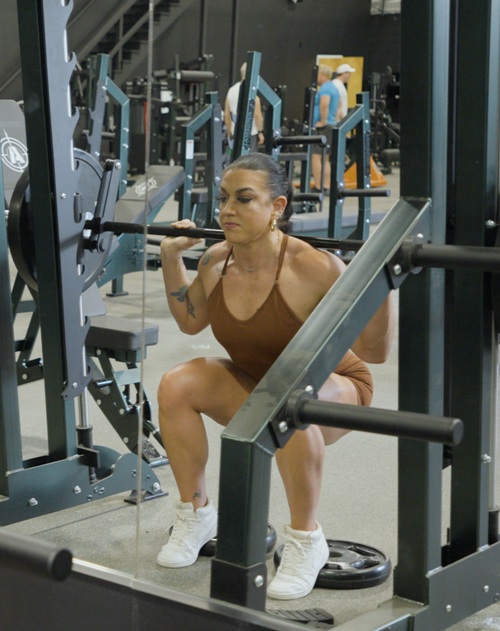
Specialization — Prioritizing What Actually Limits Your Stage Look
Do you know what your actual strengths and weaknesses are? If not, then a growth phase can still help but it will be less about what YOU as an individual needs, and more based on guess and hope. Which CAN work, but it’s not a strategy that I personally would want to invest months and months of hard work on.
A proper needs analysis – done by a coach, or by YOU if you’re really careful and analytical without being emotional – is needed here. When I say ‘emotional’ I just mean it’s hard to look objective at one’s own body, and examine through the lens of a somewhat disinterested party. I write up Needs Analysis plans for my clients all the time and it’s easy for me – I have no emotional attachment to their physique. Can I do the same for myself? Not really – I don’t see myself fairly and it clouds my assessment.
A needs analysis is simply analyzing strengths and weaknesses of each specific pose as they relate back to the standards and criteria of your chosen category.
It needs to be specific: not just “legs”, but what? Quads? Adductors? Or just glutes? All o the above? Your results from this analysis needs to inform the creation of your training split as well, or at least it’s focus on a per-muscle-group allocation of training volume.
Meeting the criteria for upper body? Great, skip it! Or maybe hit a good upper body session once every 2 weeks or so.
Legs lacking? Don’t be afraid to train them 4 straight sessions if you can recover from it (with rest days in there obviously). This gets tricky as far as designing good workouts that allow for optimal recovery, but it’s doable.
Progressive Overload With an Aesthetic Lens
Progressive overload – increasing of weight or reps over time – is still king and is going to tell you a LOT, assuming it’s done correctly.
But ultimately we don’t want better gym performance on specific exercises, we want visual results. You can train with progressive overload and hit it well but that doesn’t mean you’re going to get the growth you want in the way you want.
In addition to load and reps, you can also improve range of motion, time under tempo, and quality of execution to engage in progressive overload – but those are hard to monitor so in practice we just stick to load and reps.
Keep in mind also that as you increase in weight (or reps) on a movement, you can’t let your form compromise. If you do, that’s not progressive overload but rather just doing a shittier version of the exercise in question.
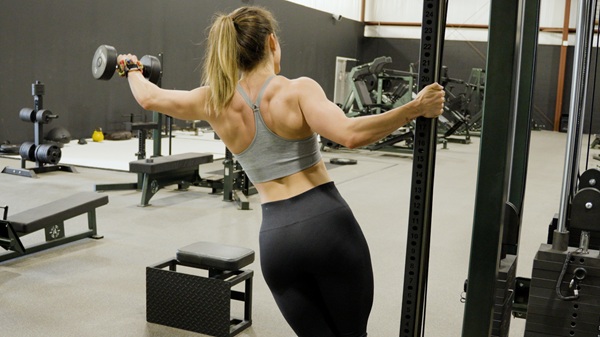
Patience Is the Most Important Training Variable
It’s not a very ‘sellable’ answer, but patience is going to win the day over literally everything else. A good plan, well executed, is going to deliver slow results. You need patience to stick with it long enough to know that it is indeed working – or also to tell that it isn’t. These aren’t things you figure out in a couple weeks. A couple months? Maybe.
Slow roll your changes during a growth phase. Give yourself time to really settle into the groove of a split. I like to tell my clients that as you start a new workout program and hit progressive overload, the actual growth starts once that overload begins to stall. At this point you’ve figured out the movement/technique improvements and crawled away from your baseline weights to something closer to your body’s actual physical capacity.
Those two things are where your rapid increases in weight in the log book are going to come from. ACTUAL progressive overload happens once the quality variables are removed and assumed to be constant – you’re now working REALLY HARD and REALLY WELL on every set. Progressive overload from here is VERY slow but this is actual tissue growth, not improvements in workout quality.
Spend some time HERE, in this “stalled out phase”, and let your body adapt slowly to the new loads you’re placing on it.

Get notified when new posts like this get published.