
Managing Body Fat During the Improvement Season
This post is part of The Ultimate Bikini Prep Guide – check out the full guide for more!
“Lean bulk”
“Clean gains”
“Recomping”
This is everyone’s goal. The reality that most of us end up facing is very different, especially once you get started on a growth phase.
Here’s the thing – growth is slow, and of all the phases in bodybuilding this one is the slowest which makes it the hardest process to “trust”. Invariably, people get impatient and get more aggressive with their off-season diet than they need to, and they end up putting on more fat than necessary.
On the flip side, you get a lot of people who are terrified at the prospect of being less lean and simply don’t eat enough to see appreciable growth.
Both are problems, so let’s talk about how to handle this in a better way.
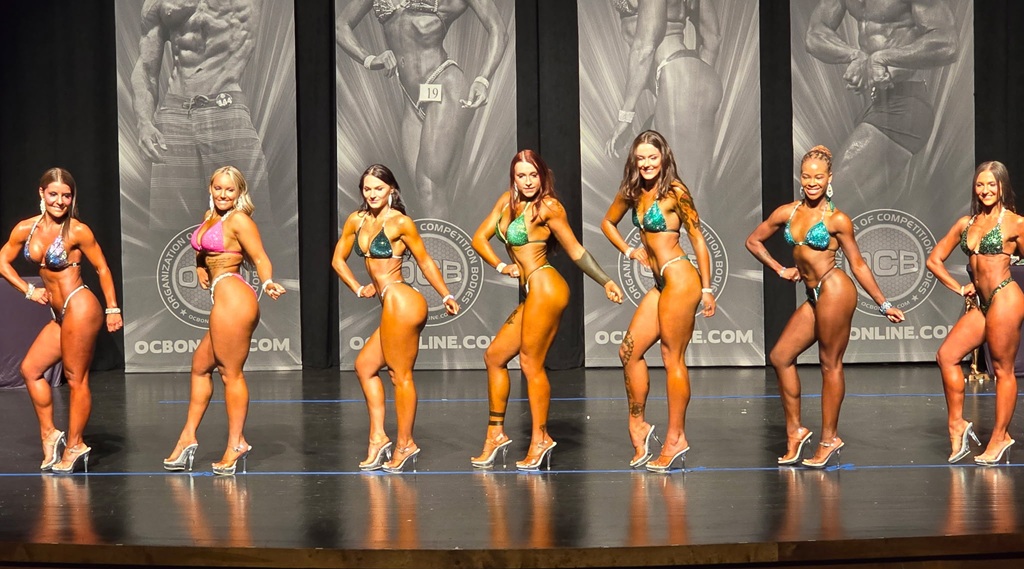
Getting Sloppy Isn’t the Price of Progress
Full stop, you don’t have to get sloppy to see results. That is more of a backlash against a previous prep. Leaning out takes discipline and structure, often times too much – so growth season is a chance to let loose, eat Pop Tarts every day because “they fit my macros” and generally abandon a lot of the principles that got you into great shape.
The best path for growth is continuing to lean into those principles, but employ some flexibility around them.
During a growth phase, you’re going to gain some body fat. Get used to the idea. But it doesn’t have to be a lot or turn your body into a mess, far from it.
Think of it this way – you can only gain muscle so quickly – but you can gain body fat at an almost unlimited rate if you try to. Our goal is to find the sweet spot where muscle gain is optimal and fat gain is minimal.
You can check out the article I wrote on nutrition planning for building muscle here:
Why Starting Position Matters for Every Prep
I’ve taken clients through prep phases where drop 40, 50, or 60lbs to get stage ready and universally they all say the same thing:
I’m never doing that again
Honestly THESE people are the ones I trust the most to keep their act together during a growth phase, because their first prep was all about paying the price of not doing that to begin with – they learned the lesson before they knew it WAS the lesson.
Starting with a higher body fat forces a longer AND more aggressive prep usually, and in that case it becomes more and more likely you’ll get stuck at some point along the way.
A lot of the strategy here comes down to a few specific points:
- Having an idea of how long your growth phase will be, within a month or two.
- Having a target set for an acceptable rate of gain on the scale, weekly (0.25-0.5% per week is pretty good)
- Having an upper limit in mind for weight, understanding you can be flexible on that if your growth response is better than expected.
If you do those things you’re likely to keep yourself in a much better spot to start your next prep.
Another consideration would be untracked meal (cheat meals, although I don’t use that term). If you plan on taking a weekly untracked meal, great – but you’ll likely program your calories a small bit south of where they would be otherwise to account for the extra calories (likely) coming in there.
Remember the goal isn’t to stay stage lean all year, it’s to keep the big picture plot in mind of staying within striking distance of stage lean given how long you plan on your next prep to be.
How to Know When Body Fat Is Creeping Past a Useful Range
You CAN just grow indefinitely but realistically you’re going to hit a wall at some point if you continue with it for long enough and it becomes smarter to engage in at least a mini-cut.
If your health markers – blood pressure and blood glucose for starters as easy checks – start climbing, this is an indicator that stripping away some body fat would be wise.
Visually, you can get soft enough to where you no longer really look like a competitor. At this stage, you should have started to cut some time back.
If training performance starts to suffer, that’s your body rebelling and experiencing too much fatigue to sustain what you’re asking it to do.
If clothes no longer fit, you can buy all new clothes or just take a few weeks to strip away some excess pounds. If the clothes STILL no longer fit after that, congrats! You built enough muscle to create a wardrobe problem, which ultimately is our goal!
Some fluctuations – dips or spikes – in weight are normal. Don’t react to those. Zoom out at look at the trends over time to see what your body is really doing.
The Transition Point — When Growth Ends and Prep Begins
Realistically, prep begins when it has to based on the calendar and your visuals as well as your weight. Especially if you’ve done a prep before, you can run the math to figure out how long you’ll need to cut to get to a certain weight, then it comes down to executing that plan to stay on schedule and hoping your weight estimate is correct.
The easy call is to cut your growth season short because of reasons, without any of them, being good.
The reason to end a growth phase, beyond what was discussed in the last section, is because it’s simply time for prep (or time to enter a hold phase prior to prep, if you’re doing that).
How long your prep should be is a much bigger question, and I have an article that goes into detail on that as well:
You want your growth phase to finish strong, and with good mental focus and clarity. That means you can roll directly into prep just by changing some variables and not having to overhaul your entire routine. That shift should ideally be pretty seamless and not feel like you’re having to reinvent or rediscover yourself as a bodybuilder.
Get notified when new posts like this get published.