
How Lean Should You Be Before Starting Bikini Prep?
This post is part of The Ultimate Bikini Prep Guide – check out the full guide for more!
Ok folks, this is where stuff starts to get a little tricky – but I’m going to try and demystify and provide a little certainty as best I can.
The issue is that when talking about “how lean” someone should be, we can’t use numbers because none of the tools that measure body fat are reliable or accurate (no, not even Dexa scans – sorry to burst any bubbles).
Visuals are also tricky because people look different even at similar levels of leanness.
So how do we do it? Let’s dive in.
Prep Rewards Positioning — Not Desire
Let’s be clear, wanting to compete doesn’t equate to being ready. You may need to take more time than you think. You may need more time than your friend or some rando at the gym that told you that you should compete.
This process is about discovering the timeline that’s best for you, and how you implement it.
Very generally, if you find yourself thinking “I don’t think I’m ready”, there’s a great chance you’re right. I’ve seen plenty of people who swing the opposite way (thinking they aren’t ready when they clearly are), but that’s less common.
Don’t rush it – err on the side of giving yourself more time. But, let’s get deeper.
You Don’t Need a Body Fat Percentage
And I mean that, you truly don’t. No one cares what your body fat percentage is on stage, they care how you look – or, said differently, how close you are to hitting the ideal for the category you’re competing in.
Why Body Fat Numbers Are a Distraction
To say it again, Dexa scans (or InBody, BodPod, hydrostatic weighing, bio impedence scales) aren’t accurate. I wish they were, but even then they’re obsolete and fairly useless in the context of a prep.
Let’s say they ARE accurate. Your Dexa scan shows you at 12.3% body fat. Great. What do you do with that information? It’s not an actionable data point. Let’s say you check it again a week later and it shows you at 11.9% body fat. Ok. That’s good, I guess? It’s validation that you had a good week, which you probably knew even before the scan. A simple body weight scale can also tell you this.
Add in that Dexa scans are typically $100-200 and you can see how useless they get real quick.
What “Stage-Level Conditioning” Actually Looks Like
“Stage lean” of course is going to be a different look based on the category, but here’s a good test.
Look at show galleries online, the NPC site is your best bet here. Find someone who won their class, and then go on a fishing trip to find them on social media. Pair up the date of the show with any posts they might have made in the 1-2 week out timeframe and see how the “off-stage” and “on-stage” looks compare.
You’ll notice a difference – most everyone looks softer on stage, but when you can see their check-in pics or gym selfies/videos, you get a better idea of how lean that person really is.
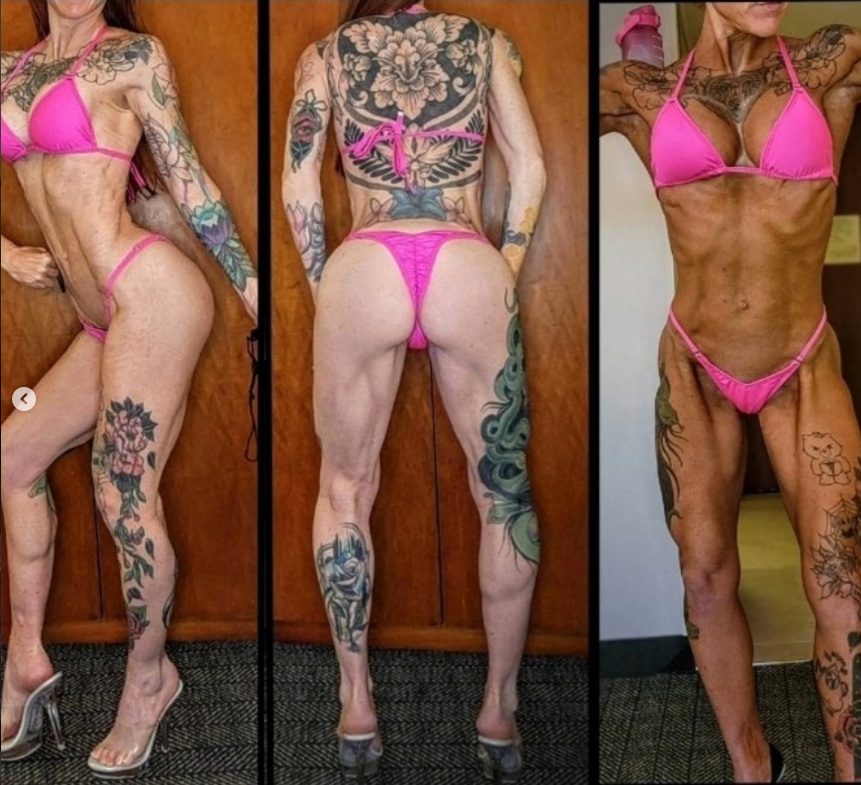
Take my client Sara for example. Here she is just 1-2 days out:
And here she is on stage, the same day she won her pro card:
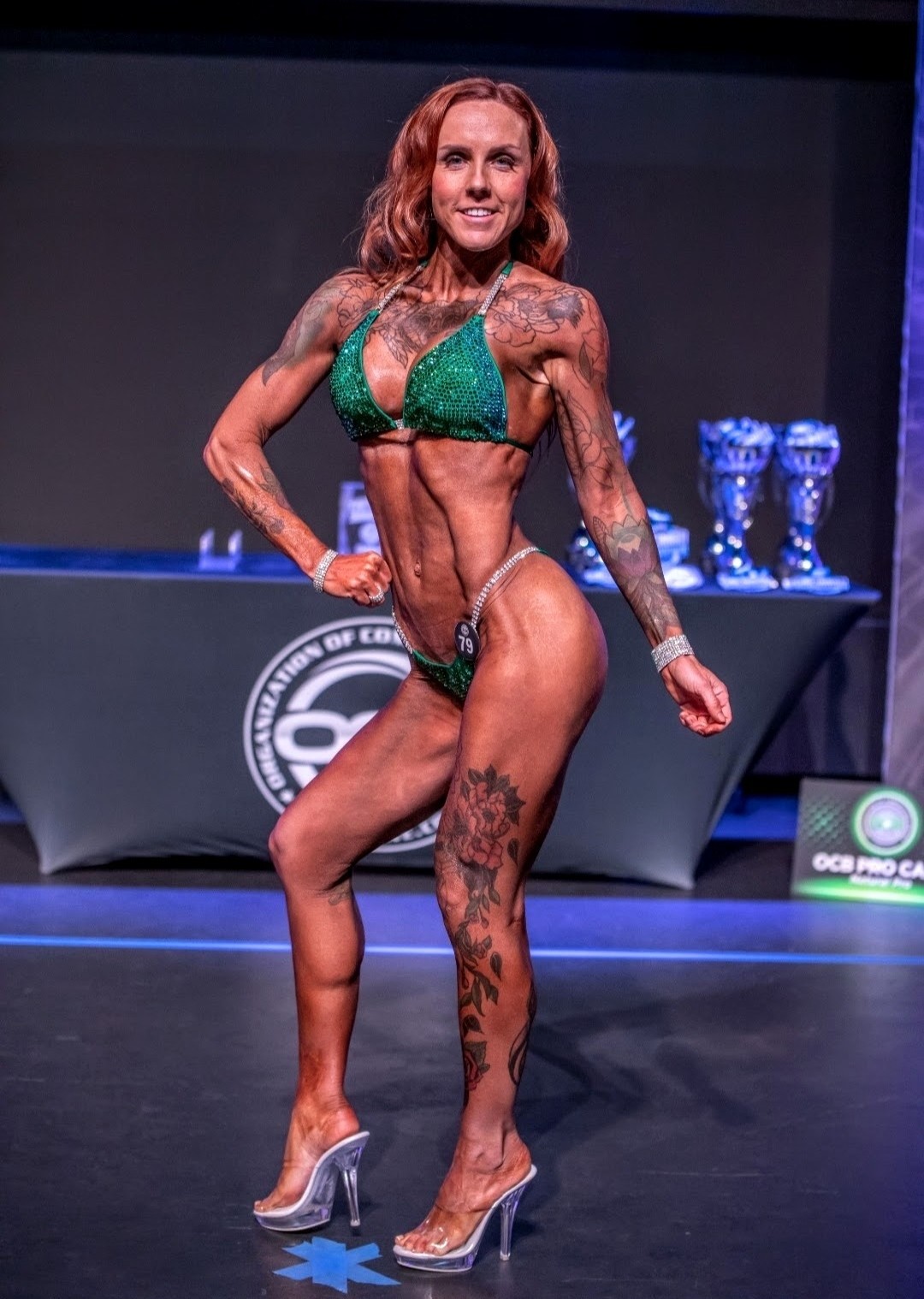
Not a HUGE difference, but it’s there. This gives you a better alignment on visually where you might want to be. Find someone in your category and do a little authorized stalking – I give you permission!
Estimating Your Likely Stage Weight (Without Obsessing Over It)
As always, the best answer for “what is my stage weight?” is to do a show, figure out what your weight actually was on show day, then determine how appropriate that was. Should you have been leaner? A bit softer? Adjust based on that.
Otherwise, VERY generally – you can use the following guidelines to get you in a rough ballpark.
If you’re 5’1”, a stage weight of 100-110lbs for bikini is probably appropriate.
From there, add 5ish pounds for every inch of height. So if you’re 5’7”, 130-140 is a general ok range to target.
Again this is VERY rough but it’ll get you in the ballpark of knowing if you’re closer to 15 pounds away or 50. If you’ve never been stage lean, you will probably still massively benefit from even a rough estimate like this.
Muscular Development — The Silent Variable
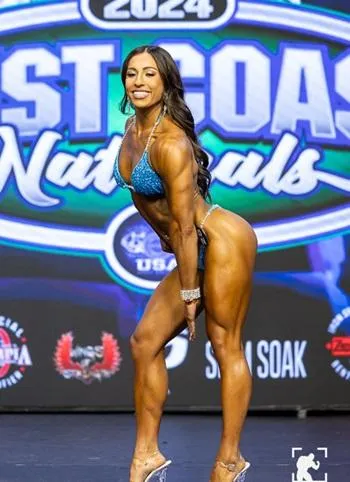
A complicating factor here is that 2 women with fairly similar builds can still have quite a difference between them in terms of how much muscle they carry, AND how appropriate that look is on their frame. More isn’t always better, neither is less.
Are You Dieting to Reveal Muscle — or Hoping to Build It?
Remember that prep is about maintaining the muscle you’ve built, not adding more. It would be nice if that were possible, but it’s not except in exceptionally rare circumstances. Safest to assume that you do NOT meet the criteria for any of those – I certainly wouldn’t plan on it!
If you don’t have a good base of muscle, you’ll find there just isn’t enough to reveal when you cut down.
Division-Appropriate Development
Make sure you’re fully versed on what your category expects in terms of development. Review the judging guidelines, for bikini you can refer to my post on bikini division judging standards:
Routine Stability Is an Underestimated Readiness Factor
Aside from “am I lean enough to jump into prep” and “do I have enough muscle?”, the thing I really care the most about is your routine being prep-ready.
If your training schedule or execution aren’t steady and high, if your diet is erratic, if your life is chaotic and stressful, fix that shit before you even think about picking a show.
Prep is going to make those problems worse much more like than it is to actually fix or improve any of them.
Get a solid, predictable, consistent and easy routine developed, then carry THAT into prep.
The Leverage Principle — Why Closer Is Better
In terms of practical strategy, we need to consider a few things.
Prep usually starts after a growth phase, and at the end of a growth phase you’ll be at your softest point in terms of conditioning.
Maintaining a leaner overall physique during growth – not obsessing over it, but keeping your diet controlled and your routine tight – is going to make every single facet of prep way easier.
When you start leaner, first up you can get away with a shorter prep – big win!
You’re also less likely to need to do anything crazy or extreme to get to where you need to be relative to your stage weight, assuming you still give yourself enough time.
Due to that, your performance and recovery will be better, and you’ll look better on stage – lean still, but less worn down, stressed, and fatigued – and those are all things that judges can see on stage.
Experience Changes Everything
Ultimately, one of the things that’s going to help you progress faster and more clearly in bodybuilding is the ability to guess at fewer things. So just “doing a prep”, even regardless of the outcome, is a powerful step forward because now you have 2 key things:
- Experience
- A basis for comparison
Prep Is a Skill
Like everything, prep itself is a skill you get better at and refine each time you do it. But unlike “practicing guitar” which you can do in 5 or 10 minute chunks, “prep” takes months – so your skill development here happens in slow motion.
That being said, each day can help inform a better approach for the next day as well, so there are micro-steps even here.
With this experience you get a better sense of how to manage fatigue and hunger cues, and better ideas of whether being more conservative or more aggressive helps you be more or less successful.
Why Second and Third Preps Are More Efficient
Just completing prep and having that baseline changes SO MUCH about how you approach your next one. Even if you do a second show 2 or 4 weeks later, THAT experience will also be more refined because of what you learned the first time.
Also if you have a clean rebound after your first show(s), you’ll spend some time growing and start prep in your next season from (ideally) a much leaner place that you did for your first season, which immediately means you’re going to have less ground to cover, and have a clearer vision of how things will look on stage from earlier on in the process.
This Logic Applies Across Divisions
This is universal planning and strategy – the target for each category changes, but ultimately that relates more to:
- How you approach the off-season in terms of growth
- How far you take it in terms of leanness and conditioning when you prep
As an example: bikini vs. fit model, these have (slightly) different looks, but ultimately a lot of women targeting bikini could probably work into fit model with their “6 weeks out” look, give or take. So Fit Model just requires a bit less runway (time in prep) to pull off, and the muscle requirements are dealt with and manage in the off-season.
A Practical Way to Evaluate Your Readiness
The best prep experiences happen when prep feels more like “refinement” as opposed to “reinvention”, at least for less-seasoned competitors.
Once you have more experience and a better idea of how you handle certain variables in prep, you may find you NEED a longer, more aggressive off-season to really blow up and add size, which will result in a longer cut – but I wouldn’t take that approach by default and not early in your competitive career either.
Prior to starting prep, make sure you pass the gut check test for having enough muscle to meet the requirements of your division.
Be lean enough that you can start your official prep phase with at least a super vague idea of how you’ll look on stage. If you “start prep” and when looking at your photos you think “no idea how I’m gonna pull this off”, I would focus just on basic fat loss to tighten up and improve conditioning first.
Also make sure you’re emotionally ready for prep, and have your stress and lifestyle variables managed enough to be set up for success.
And of course if you want to join a community where you can post your pics and get feedback from me along with hours and hours of educational material and regular group support calls, you can check out Bikini Blueprint for details on that.
Get notified when new posts like this get published.