
What Competing Can — and Can’t — Give You
This post is part of The Ultimate Bikini Prep Guide – check out the full guide for more!
As a coach, when someone comes to me and says they want to compete I always ask “why?”
This isn’t about gatekeeping – a lot of coaches have this philosophy, where if you’re going to compete, well, dammit you need to prove you’re made of the right stuff by spending some arbitrary number of years following a plan consistently before you’re “good enough” to prep.
That’s stupid and I don’t care about that. We’ll put you on stage when you’re ready, however soon/far away that is.
I’m much more concerned with your WHY, and this often comes down to some misconceptions and what you can and can’t get out of competing.
The Question Most People Ask Too Late
Why?
Why are you doing this? I would want anyone to be able to articulate a clear answer to that question. You will NEED this answer to lean back on during challenging days of prep, of which there will be many.
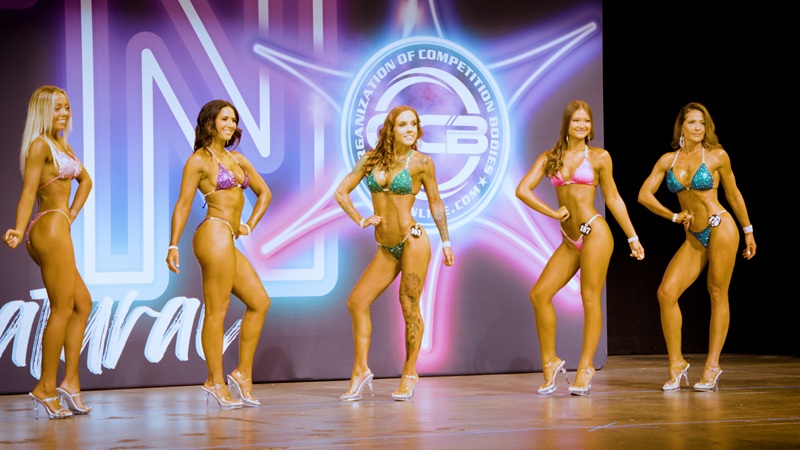
For me? It’s complicated.
Partly, well, this is what I do, and competing is my way of putting an example out there of how you can do it and balance it with a busy life, since I’m also a business owner and an amateur musician who is always balancing a ton of projects. It’s also a marker and a way for me to track my progression over the years, and honestly I just strive on the structure of a plan and competing is a good carrot dangling out there as a reminder to do well every day, since that effort is what’s reflected on stage.
Notice I didn’t say anything about winning. If that’s your why, you need to have a plan for when you don’t win also.
Competing Can Be Rewarding — and Costly
There are a lot of benefits to competing. The feeling of accomplishment in checking the box on a huge goal is nothing to sneeze at. Physique improvement is the ultimate expression of discipline and a source of pride you can wear with you everywhere you go.
It can also be stressful. Expensive. Can strain relationships or make life hard, generally.
The results you see will be fleeting – all of this is temporary.
You’re building a sandcastle, not a skyscraper.
You have to be ok with the tide washing it away.
Fully understanding the pluses and minuses of competing helps make sure you’re actually ready for it.
What Do You Actually Want From Competing?
There are a handful of things someone can get from the experience of stepping on stage. None of these are wrong.
Validation, Achievement, or Experience?
If you’re looking for validation, I will tell you that therapy is an easier and less expensive path to that. Bodybuilding is every bit as likely to break someone down if they’re in a fragile place as it is to build someone up. Don’t envision stepping on stage and winning – envision showing up in great shape and getting your ass kicked anyway. How will you handle that?
Achievement is a great takeaway. Even without winning, getting on stage and being competitive is a huge accomplishment.
Experience? Super valid. But experience for what? This isn’t really a transferrable skill, so “experience for my next show” is the correct answer here.
External Milestones vs Internal Fulfillment
I find both of these categories super valid as I put myself in each column, for sure.
External milestones would be like a date on the calendar to signify changing phases. The show marks the end of the cut, and the start of a rebound or growth phase. You can do this without a show, but stepping on stage makes it a bit more ‘real’.
Internal fulfillment is where it’s at – just make sure you’re not looking for prep to solve your problems.
“If only I was super jacked and lean and could win a show, I would be happy” – nope, wrong answer. Find your peace and happiness first, let competing be a part of that equation – it’s not the answer or the solution.
The Pro Card Myth (And Why It Persists)
I wrote a whole post on contest prep myths and the “pro card value” was a big one there – check the whole post here.
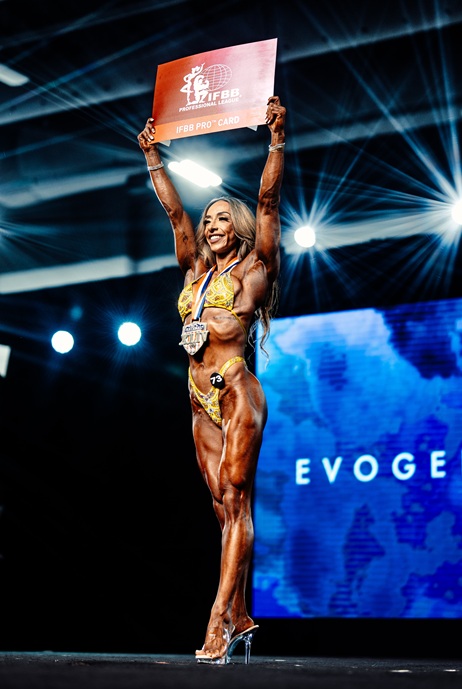
What People Think a Pro Card Changes
A lot of people think a pro card brings certain things:
- Money: it absolutely does not
- Sponsorships: influencers get sponsorships, not pro cards. If you’re an influencer and you earn a pro card, boom – upgrade! If you’re an amateur with little social media presence and you earn a pro card, it will do nothing for you here.
- Recognition: you’ll get a lot of congratulatory messages for a couple days, then that dies off and you and your pro status become old news – it’s a title you get to carry, but it also means less to others than it does to you
- Legitimacy: from the perspective of a coach, I will say as someone without a pro card I didn’t need one to build a super successful coaching business. Plenty of crappy coaches have pro cards. It means nothing, ultimately – you can strategically leverage it into something, but that takes a lot of WORK in skills unrelated to bodybuilding – can you master those skills also?
What It Actually Changes (and What It Doesn’t)
Earning a pro card first and foremost means you can no longer compete as an amateur. Amateurs have a LOT more show options, and being a pro it’s more likely you’ll face significant travel for shows as finding one close-ish to home won’t always be an option.
The level of competition obviously goes WAY up. Expect to take 1-3 years off from competing (in many cases) to grow enough to be competitive in the new landscape.
Expectations go up, as does the opportunity for criticism. Show up in ‘ok’ shape as an amateur and you can still finish top 2 or 3 in a lot of cases. If you show up off on a pro stage, judges remember that and it starts to be an expectation you can end up carrying with you.
The level of difficult shoots way up on the pro stage.
Loving the Process vs Chasing the Outcome
Mindset is everything here. You’ve gotta do this first and foremost because you love it. Period, end of story.
You have to love the process, not the results. If you enjoy every aspect of what you do in the world of bodybuilding, the results are more or less guaranteed as long as you’re intelligent and strategic in how you do things.
If you find yourself fighting the diet, hating, cardio, having to force yourself to go train – it’s just not likely to work out in the long term.
That being said you can also face those challenges head on. Very few people LOVE doing cardio, it’s a fact. Find ways that you can turn it into something you look forward to on some level. Make that your time to listen to your favorite podcast, or stream a show that your significant other doesn’t want to watch (hello Star Trek, for me), SOMETHING that makes it special and easy for you to show up to.
The Tradeoffs You’re Willing — and Unwilling — to Make
Every goal worth pursuing comes with trade-offs. You work hard, you practice discipline, you make sacrifices. In bodybuilding this is turned up to 11 (or 13, or higher) and treated like a badge of honor.
Let’s again return to the music analogy. You know who brags about practicing for 10 hours a day until their fingers bleed?
Newbies.
Experienced players shut up and let their music speak for them.
In bodybuilding it’s the same. Yes, you’re disciplined. But no one really cares, that’s just you talking about you. It’s expected if you want to be successful. Sacrifice and trade-offs are part of the game.
Time, Money, and Mental Bandwidth
In short, if you want to compete you have to be comfortable giving up one big thing.
Normalcy.
Or at least, you need to invent or create a new normal.
You’ll invest a lot of time, money, and there will be a lot of opportunity cost as well (the economists are getting excited here now). There will be plenty of other things you can’t do or can’t experience in full because of bodybuilding. That’s something you accept when you sign up.
What Happens When the Tradeoffs Aren’t Worth It
This again comes back to the ‘why’ of it all. If your ‘why’ is strong and something you firmly believe in that resonates with you, the whole ‘not worth it’ thing becomes a conversation you don’t need to have.
If you don’t have a compelling ‘why’, think harder. If you can’t come up with one, this probably isn’t for you.
That’s not gatekeeping, that’s saving yourself a mountain of headache.
If you’re chasing results without respect or love for the process, there’s probably little value in that end goal.
Competing With Clear Intent Makes Every Outcome Better
So formalize that ‘why’ and use that as your North Star. If someone asks ‘why are you a bodybuilder?’ (to be clear, no one probably will), have a 3-7 second elevator pitch that explains your fundamental reason(s) for doing it.
That makes it something you can always refer back to and easily pull up in a pinch.
Want to learn more?
Get notified when new posts like this get published.